September 30, 2026
erapickleball.com Pickleball Academy: Progressive Programs
By @johnnyhznm641
When I first walked into Era Pickleball a few years back, the unmistakable hum of paddles and the rhythmic thwack of balls told me something important about the sport in this place. Pickleball has exploded into community life and serious training in equal measure, and Era Pickleball has built its identity around a simple truth: progress comes from structure that respects individual timing. The academy I met was less a string of lessons and more a living system, a map of growth that players could navigate with confidence. What follows is a window into that system, and a guide to what it takes to move from casual weekend warrior to a player who can hold their own in a multi-sport environment where precision matters.
Era Pickleball operates with a mindset that progress is not a straight line but a series of deliberate shifts. The first thing you notice is the way the space is organized. Courts are not merely rows of courts; they are stages for specific skills, reinforced by drills, video feedback, and a coaching approach that respects the here and now while guiding you toward what comes next. It’s not just about technique. It’s about how technique fits with court strategy, physical limits, and the mental clarity needed to stay crisp under pressure. From the moment you sign up, you feel that this academy has built a language of improvement around the game, one that helps players articulate their strengths and address weaknesses with practical, actionable steps.
A big part of the Era Pickleball experience is accessibility. They’ve designed progressive programs that accommodate a wide range of players, from newcomers who have never volleyed a ball to experienced players who want to sharpen specific aspects of their game. The facility itself mirrors that philosophy. It’s clean and well-lit, with a thoughtful layout that reduces friction between sessions and makes it easy to observe and absorb. The coaching staff brings a blend of competitive background and real-world teaching skill. They know how to explain the why behind the how, and they understand that the most durable improvements come from habits formed during practice as much as from the most dazzling rally you can conjure in a single match.
This is a story about progression, yes, but it’s also a story about the culture that supports steady, sustainable growth. Era Pickleball is not a place where people chase overnight breakthroughs. It’s a place where consistent effort, honest feedback, and a respectful competitive environment create durable improvements. The academy’s philosophy is rooted in cognitive and physical science as much as in field experience. You’ll hear talk of motor learning principles, muscle memory, decision-making under pressure, and the way fatigue changes decision quality as you move through a single match. It’s not esoteric. It’s practical. And it’s exactly what gives Era Pickleball its distinctive edge.
A key element in any serious training program is the cadence of evaluation. At Era Pickleball, progress is tracked not by vague impressions but by a combination of match play outcomes, drill-based metrics, and video analysis. Players leave sessions with concrete takeaways, often written in a short, actionable plan that they can apply before the next practice. The feedback loop is tight, and that matters. It prevents stagnation and creates a sense of momentum that keeps players coming back hungry for what’s next. It also means you learn to interpret your own performance, stepping back from the ego of a good rally long enough to ask what could have been done differently and what habit to reinforce.
Anyone who spends time at Era Pickleball will tell you that the academy’s true strength lies in its progressive architecture. You don’t jump to high speed, high expectation scenarios without the foundation to support them. The early stages build exact footwork, grip consistency, and shot selection, while later stages layer in court awareness, tempo control, and strategic deception. It’s a ladder, not a cliff. The rung you’re on matters as much as the step you’re about to take, and that patient design is what keeps players from burning out or getting discouraged.
A practical note for potential students: the timetable is flexible without sacrificing rigor. The academy respects the realities of daily life—work, family, travel—while preserving the essential structure that makes progress tangible. If you’re juggling a busy schedule, you’ll still be guided toward incremental gains. If you can dedicate more hours, you’ll find the system scales accordingly, with more specialized drills and more frequent match play to accelerate improvement. The culture of Era Pickleball is not about forcing more hours; it’s about translating time spent on the court into meaningful, durable changes in your game.
The following sections lay out the backbone of Era Pickleball’s progressive programs, why they work, and how players move through them with clarity and intention. The aim is to help you understand not just what you’ll learn, but how you’ll learn it, and why that approach aligns with real-world competition and everyday enjoyment of the game.
A philosophy of layered skill development
Progressive programs are built on the premise that you can’t optimize a single shot in a vacuum. A serve works best when it’s set up by footwork, when it’s supported by return expectations, and when you can maintain a ready stance for the next exchange. Era Pickleball’s approach emphasizes that the most valuable gains come from small, repeatable improvements across a spectrum of skills, then integrating them into real play. The coaching teams design practice blocks that reinforce this integration, weaving technique, decision-making, and physical efficiency into a coherent practice experience. Players don’t simply learn new mechanics; they learn how to apply them under the conditions that show up in a match, including fatigue, crowd noise, and the psychological tension of a tight score.
Another aspect that differentiates Era Pickleball is its emphasis on adaptability. The academy recognizes that players come with different bodies, different histories with the sport, and different goals. Some are chasing open-level competition, others want a reliable recreational hobby with less risk of injury, and a few are aiming to pivot from doubles to singles with a new sense of strategic poise. The programs are designed to accommodate that spectrum without requiring everyone to fit a single mold. Coaches tailor drills, adjust tempo, and set individualized targets, always anchored by the core principles of good footwork, consistent contact, and purposeful shot selection.
A practical upshot of this philosophy is the way sessions are paced. You’ll find that beginner blocks begin with the fundamentals—grip, paddle angle, stance, and short court rally discipline—built to instill reliable mechanics. As you progress, the drills grow more complex, injecting patterns that force you to read opponents, hide your intentions, and manage space on the court. The best players are the ones who maintain the same low error rate while increasing the pace, variety, and pressure on their opponents. Era Pickleball’s structure makes this balance achievable without abandoning the comfort of well-practiced basics.
From the first lesson to the final evaluation, progress is measured by a simple but powerful metric: consistency. Not just landing the ball in the correct spot, but doing so with the repeated confidence that comes from muscle memory and situational awareness. This is how you turn a weekend hobbyist into a player who can contribute meaningfully to a team, maintain composure in a high-stakes moment, and push through the inevitable rough stretches of improvement.
A pathway that respects time and goals
The programs at Era Pickleball unfold along a clear arc, but they do so with the flexibility that serious players need. It’s not a rigid ladder with a single climb. It’s a curated journey with multiple entry points, where you can drop in at different levels and still feel a sense of progression and purpose. Beginners are welcomed with a gentle but purposeful immersion that emphasizes stabilization of fundamentals. Intermediate players receive more complex patterns, decision-making drills, and competitive play that tests how well they have absorbed and integrated the basics. Advanced players find themselves in a continuous loop of refinement, with specialized cohorts targeting singles, doubles, or specific shot types, depending on their competitive ambitions.
The schedule can adapt to seasonal patterns too. If you’re training for a local league or a regional tournament, the academy creates a compendium of practice blocks that align with those timelines. Off-season conditioning, on-court drills, and video review sessions can be stacked to maximize learning without burning out. The key is a coherent plan that connects practice content to match performance, rather than treating drills as standalone exercises. When players see that a drill directly improves a particular match scenario, motivation follows naturally. That is the heart of Era Pickleball’s design: coaching that makes sense in the context of real games, not just in the abstract.
Coaching culture that keeps you moving forward
A standout element at Era Pickleball is the coaching culture. The best mentors here are not simply technicians who can describe the perfect paddle plane; they are tactically aware communicators who can translate complex ideas into accessible, repeatable actions. They watch closely, offer candid feedback, and celebrate the small wins that accumulate into larger gains. They also understand when to pull back and let a player experiment. Growth, in this mindset, is not about compliance but about curiosity and disciplined self-discovery on the court.
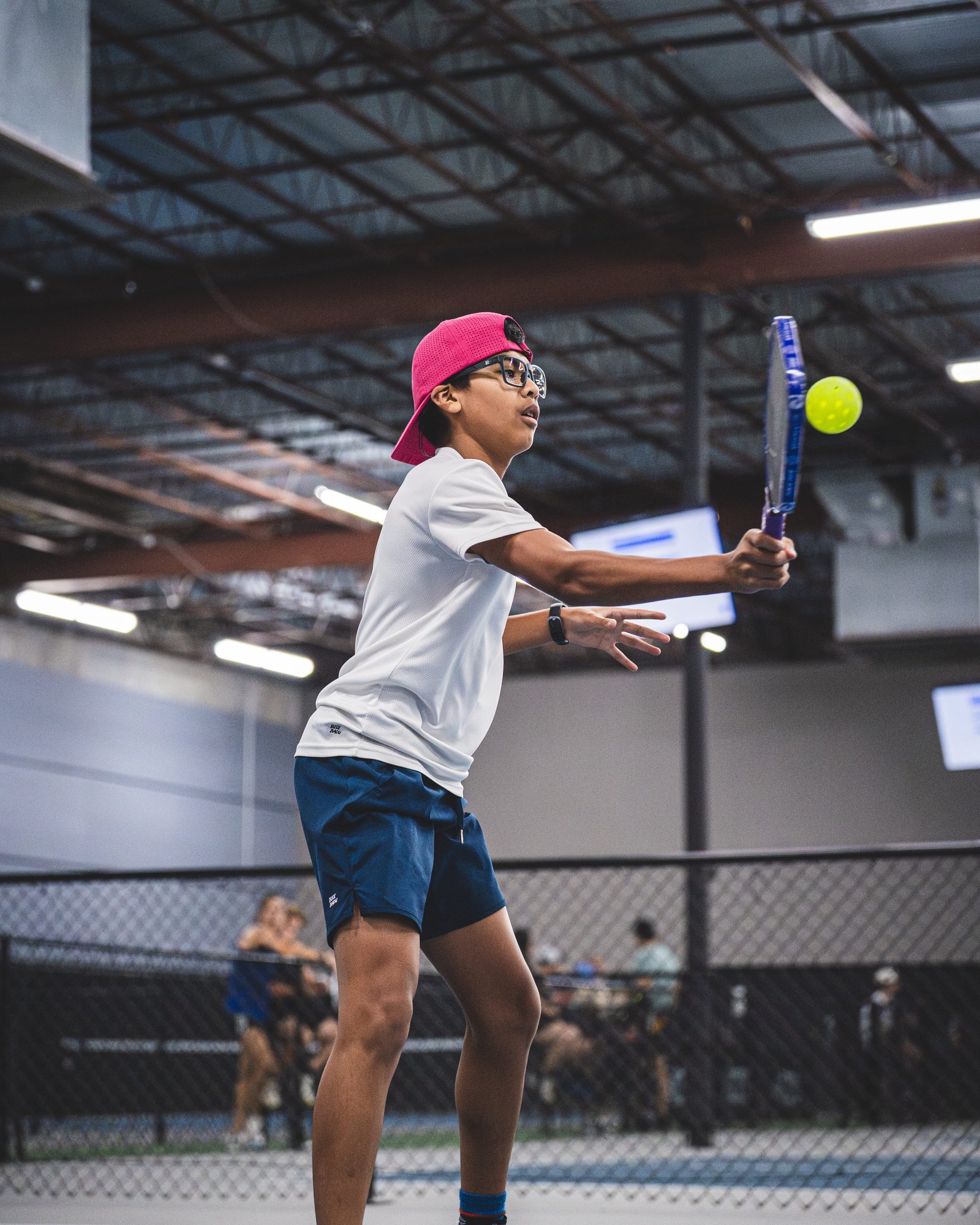
From a practitioner’s point of view, the demonstrations you see during clinics or group sessions are not mere shows. They’re demonstrations of macro patterns in play, the kind of contextual cues you need to recognize in a real exchange. The best coaches model the exact behaviors they want to see: a patient but relentless tempo, a willingness to adjust at the micro level, and a refusal to overreact to mistakes. It’s an environment that invites questions without turning every error into a crisis. The goal is a disciplined, positive learning loop rather than a punitive one, so players feel safe taking reasonable risks and testing new ideas.
Facilities, access, and practical considerations
Era Pickleball’s facilities reflect the same mindset that characterizes its coaching. The courts are well-maintained, with consistent surfaces and clear sightlines for the coaching team during demonstrations and feedback sessions. There is ample space between courts to allow coaches to observe without shouting over the top of nearby rallies, which creates a calmer learning atmosphere. The equipment is modern and reliable. Paddles and compression balls are standard, with spare sets available so a session isn’t delayed by a missing tool. The court rental option is straightforward; you can secure a block of time that fits your training plan and stack sessions as your calendar allows. For players focusing on endurance work or a high-volume practice week, the facility makes it feasible to stay on plan without logistical headaches.
Charge structures and value
Financial planning matters when you set out on a progressive training path. Era Pickleball’s pricing is designed to reflect the value of sustained development rather than a cover charge for a single clinic. It’s not cheap, but it’s transparent. You’re paying for structured progression, consistent coaching, reliable facilities, and the continuity that helps you track and measure improvement over months. If you’re comparing to random drop-in classes, the difference is clear: the academy’s programs are designed to create cumulative gains, with concrete milestones and regular check-ins that keep you on course.
One common question concerns the balance of private coaching versus group sessions. There is room for both in Era Pickleball’s model. Private coaching can accelerate learning for players who need targeted help with specific shots or patterns. Group sessions, meanwhile, offer the social reinforcement that helps players stay motivated and accountable. The mix allows you to tailor your plan to your learning style, your budget, and your competitive ambitions. The system rewards consistency—show up for the scheduled blocks, commit to the drills, and the benefits accumulate.
Two candid notes about edge cases
If you have a long layoff due to injury, Era Pickleball’s staff tends to take a pragmatic approach. They’ll map out a gradually rebuilding plan that respects healing timelines while leveraging remaining fitness. That can mean lowering the intensity of on-court work for a period, then reintroducing specific movement patterns with heightened attention to form and safety. If you’re coming back after surgery or a significant time away, you’ll want to communicate openly with your coach about what you can handle and how quickly you want to progress. The academy’s philosophy accommodates patient, thoughtful progression, rather than pushing you into patterns that might irritate a recovery.
There are also situations where a player’s goals diverge from the standard progression route. Perhaps you’re a doubles specialist aiming to sharpen net play for higher-stakes tournaments, or you’re exploring single-sport crossover, integrating footwork and decision-making that translate into other racquet or paddle sports. The program can accommodate such shifts, but the best results still come from aligning those ambitions with a structured path that ensures you don’t skip foundational skills in pursuit of flashier highlights. In those moments, the coaching team will help you carve a personalized lane that respects your time and keeps the trajectory steady.
A practical map of the progression
To understand what you’ll experience as you move through Era Pickleball’s progressive programs, imagine a journey that unfolds in stages rather than a single leap. The first stage centers on mastery of fundamentals. You learn to grip the paddle with confidence, to position your feet correctly, and to sustain rally exchanges with controlled contact that minimizes unforced errors. The second stage introduces shot variety and tactical awareness. You begin to mix depth and angle with your drives and dinks, and you start reading the opponent’s positioning more accurately. The third stage focuses on timing and tempo, teaching you how to shift the pace of the rally to control the court and force errors without chasing every ball into the net. The final stage emphasizes match temperament—reading pressure moments, orchestrating the pace of a point, and maintaining focus through fatigue.
That arc does not happen in isolation. It happens on a court where players observe and are observed, where coaches provide precise feedback, and where each practice block builds toward a tangible goal—whether that is a tournament readiness, a weekly league performance, or simply the satisfaction of seeing real skill growth week after week. The result is a robust, enjoyable training path that respects the complexity of the sport while delivering concrete, measurable improvements.
Two lists that crystallize how the programs are structured
-
Program levels that map to skill and experience
-
Beginner fundamentals
-
Core technique and consistency
-
Transition to more complex rally patterns
-
Tactical decision-making under pressure
-
Advanced match play and strategy refinement
-
Coaching and practice features that sustain progress
-
Video review and precise feedback
-
Structured practice blocks with clear goals
-
Individualized plan adjustments based on performance
-
A balance of group dynamics and private coaching when needed
-
Regular opportunities for match play to anchor learning
The human element in practice
What makes Era Pickleball feel different is not simply the curriculum, but the way players and coaches interact within it. You quickly sense public pickleball courts a shared language, a respect for each person’s journey, and a collective commitment to staying curious. Coaches acknowledge that improvement is incremental and nonlinear. Some days you’ll feel on top of your game; other days you’ll face a plateau. In that context, the staff’s role is to help you stay engaged, to reframe the challenge, and to teach you how to adjust your effort, your positioning, and your shot selection to regain momentum.
The environment supports honest self-assessment. When a player recognizes a recurring flaw, the coaching staff helps translate that into a practical, short-term correction. That might mean focusing on a narrower set of footwork drills for a week or adjusting the timing window of a particular shot. The key is that the feedback is actionable and tied to the day’s practice objectives. You won’t leave with a laundry list of vague improvements. You’ll leave with a few high-impact changes you can implement immediately, and a plan for how to practice them in the coming sessions.
If you’re evaluating whether Era Pickleball is right for you, a good starting point is to observe a session or speak with a few players at a similar level. Notice how the coaches frame goals, how they measure progress, and how players respond to feedback. Look for a learning culture that treats mistakes as data rather than as a verdict. In my experience, the best moments come when a player reports a small, surprising improvement—the moment you realize you can manipulate the pace of a rally in a way that previously felt out of reach. Those moments are not accidents in Era Pickleball’s world; they’re the predictable outcomes of a program built around disciplined practice and honest coaching.
Beyond the court: the broader value
Progressive programs do more than build better paddlers. They cultivate time management, goal setting, and resilience. You learn to plan your schedule around your training blocks rather than letting practice happen in fits and starts. You develop patience as you watch your own performance unfold in measurable steps. You become more comfortable with the quiet discipline that the sport rewards: the habit of arriving early, warming up thoroughly, and staying focused through a long day of court time. Over months, this approach translates into better balance in life, sharper problem-solving under pressure, and a more constructive attitude toward both success and struggle on the court.
For families and players new to the sport, Era Pickleball offers a welcoming entry point that doesn’t overwhelm. The progression is visible, the coaching is supportive, and the culture rewards effort over bravado. You can see that in the way players celebrate improvements that are small but meaningful, and in how the staff facilitates a sense of belonging without ever sacrificing accountability. In a sport that can feel fast and unforgiving for beginners, this combination of structure and warmth makes the path to improvement sustainable.
Verdict on the practice of progress
If you’re curious about how to approach your own growth in pickleball with intention and realism, Era Pickleball provides a blueprint that respects both the time you have and the complexity of the game. The programs are not a magic ticket. They are a disciplined, well-supported framework that translates time on the court into real changes in your play. You learn to read the situation, to respond with measured, precise actions, and to maintain the mental calm that allows your best game to emerge when the pressure rises.
In the end, the core value of Era Pickleball’s progressive programs is straightforward. They teach you to break a big improvement into concrete, achievable steps, and they give you a community and a structure that makes that process repeatable. The joy of paddling, dinking, and rallying share the same space as the hard work of building skill. The result is a player who understands not only how to hit a ball well, but how to think through a point, how to manage time and space, and how to keep showing up day after day with curiosity and grit.
If you’re considering joining, take a moment to imagine the long arc of your own development. Picture a year from now, a calendar of sessions filled with specific aims, a notebook with feedback you can act on, and a growing confidence that you can handle tougher opponents and tougher situations. That is the promise of Era Pickleball’s progressive programs. It is a promise earned through steady practice, honest feedback, and a community that believes in growth as a shared journey as much as an individual achievement.
❧